Program
Date: 04. November 2026.
Time: 11.30h
Location: "Dragan Popović" Hall, Institute of Physics Belgrade
Dr Emil Božin, IPB, Serbia
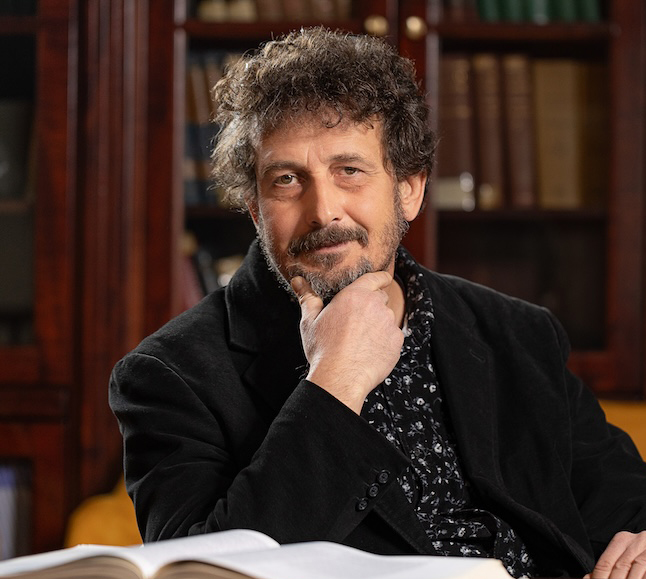
Dr. Emil Božin is an established researcher in condensed matter physics, specializing in local atomic structure, structural disorder, and advanced X-ray and neutron scattering techniques. As the ERA Chair holder within the HIP-2D-QM project at the Institute of Physics Belgrade, he plays a key role in advancing research excellence in quantum materials, strengthening institutional research capacities, and fostering international scientific collaboration.
Date: 22. October 2026.
Time: 11-13h
Location: "Dragan Popović" Hall, Institute of Physics Belgrade
Dr Darko Tanaskovic, IPB, Serbia
Dynamical mean-field theory (DMFT) was developed in the early 1990s providing a correct description of the Mott metal-insulator transition in the Hubbard model. When combined with density functional theory (DFT), it later emerged as a unique method for the quantitative description of the spectroscopic and transport properties of materials whose valence electrons are in between itinerant and fully localized [1]. We will first overview the theory behind the DFT+DMFT method and then, following the work of K. Haule and his collaborators [2], we will illustrate its success in studies of iron-based superconductors and rare-earth nickelates.
[1] Gabriel Kotliar and Dieter Vollhardt, Strongly Correlated Materials: Insights From Dynamical Mean-Field Theory, Physics Today 57, 53 (2004).
[2] Kristjan Haule, Tutorials for the DFT+embedded DMFT Functional, 2007-2024, http://hauleweb.rutgers.edu/tutorials/index.html
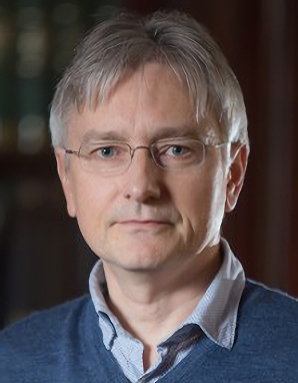
Dr. Darko Tanasković is a Principal Research Fellow at the Institute of Physics Belgrade, specializing in the theoretical investigation of strongly correlated electron systems, quantum phase transitions, and charge transport in condensed matter. His expertise includes dynamical mean-field theory (DMFT), Hubbard and Anderson models, density functional theory (DFT), and numerical approaches to electron–phonon interactions, polaron dynamics, and vibrational properties of materials. His research combines advanced theoretical modeling with experimental collaborations to understand the microscopic mechanisms governing electronic transport, metal–insulator transitions, and emergent phenomena in quantum materials.
Date: 6. and 13. August 2026.
Time: 10-12h
Location: "Dragan Popović" Hall, Institute of Physics Belgrade
Professor Ivana Evans, Department of Chemistry, Durham University, Durham, U.K.
This presentation will cover the complete lifecycle of conducting research at large-scale research facilities: from designing and planning an experiment, through writing successful proposals for beamtime applications, to carrying out the experiment and completing the subsequent activities, including preparing the experimental report and publishing the results.
These topics will be discussed both from a general perspective and specifically in the context of physics and physical chemistry of functional materials, with a focus on access to synchrotron and neutron research facilities.
The session is designed as an interactive workshop, and participants are encouraged to bring their questions or draft experimental proposals for discussion if they wish.
The first part of this presentation will introduce the fundamentals of diffraction, the most powerful technique for the structural characterization of crystalline solid-state materials. It will provide a step-by-step explanation of where structural information is contained within a diffraction pattern and how this information can be extracted. Complementary characterization techniques, including electron microscopy and solid-state nuclear magnetic resonance (NMR), will also be briefly introduced.
The second part of the presentation will focus on selected case studies demonstrating the application of these techniques to the investigation of functional materials. The aim is to illustrate the capabilities and advantages of each method, as well as their limitations.

Prof. Ivana Radosavljević Evans is Professor of Solid State and Structural Chemistry at Durham University (UK). Her research focuses on the structural characterization of functional materials using advanced diffraction, neutron and synchrotron techniques, with applications spanning energy materials, inorganic solids, and crystallography. She is internationally recognized for her contributions to structural chemistry and currently serves as Vice-Chair of the International Union of Crystallography (IUCr) Powder Diffraction Commission.
With more than 30 years of experience, she has led numerous research projects and collaborations at major international neutron and synchrotron facilities, including ISIS, ILL, ESRF, Diamond Light Source, and ANSTO. Her work combines state-of-the-art experimental methods with crystallographic analysis to reveal structure–property relationships in advanced functional materials